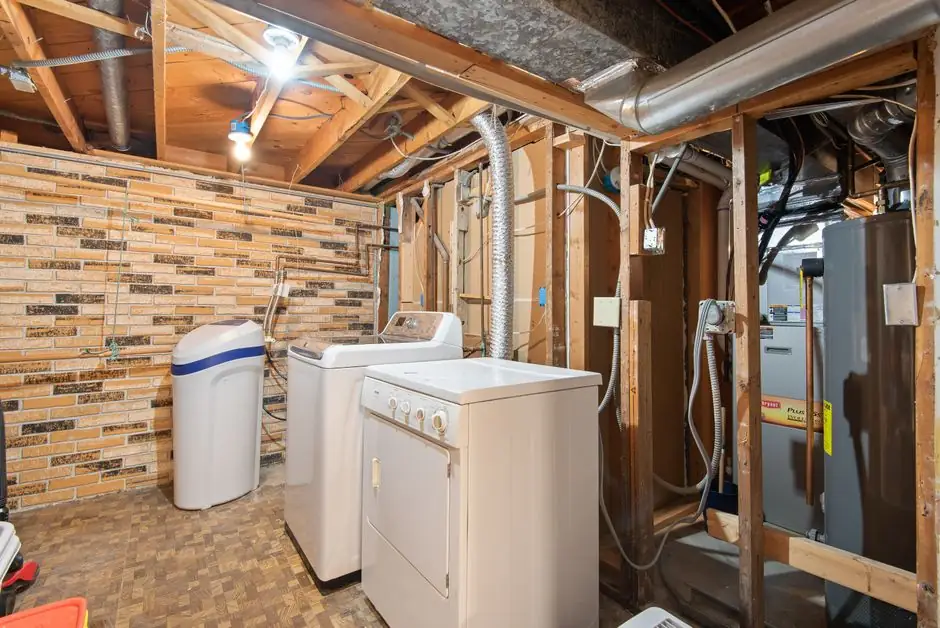
Your water heater is making a popping noise because sediment has collected on the bottom of the tank and water is boiling underneath it. The burner or heating element heats the steel floor of the tank, trapped water flashes to steam beneath the mineral crust, and that steam bubble collapses - over and over, every heating cycle. It is not a loose part and it is not air in the lines.
Here in Port Charlotte the problem shows up faster than almost anywhere else in Florida because our municipal water runs hard, and a tank that would stay quiet for five years up north can start crackling in two or three. Below we cover what the sound means, what it costs to fix in 2026, and the point where flushing stops helping and replacement is the smarter money.
What the popping sound actually is
A water heater making a popping noise in Port Charlotte is almost always a sediment problem, not a mechanical failure. Every gallon that comes out of the tap carries dissolved calcium and magnesium. When the tank heats that water, the minerals drop out of solution and settle on the hottest surface in the tank - the bottom.
Over months, that layer turns from loose grit into a hard, ceramic-like scale. Water gets trapped in the cracks. The gas burner or lower heating element fires, the steel under the crust climbs past 212°F, and the trapped water flashes to steam. You hear the pop when the bubble collapses.
Three things make the sound worse over time:
- Scale thickness. A thin dusting of sediment ticks quietly. A half-inch crust bangs.
- Recovery cycles. Every time someone showers, the burner runs longer to push heat through the insulating layer.
- Temperature setting. Tanks set at 140°F or higher scale up roughly twice as fast as tanks set at 120°F.
If you also notice a rumbling or a low roar alongside the pop, that is the same sediment problem at a later stage - the burner is running hot and long because it cannot transfer heat efficiently anymore.
Why Port Charlotte water causes popping so fast
Port Charlotte draws from the Floridan aquifer, and that water is hard - commonly in the 8 to 12 grains-per-gallon range, with total dissolved solids that leave visible scale on fixtures within a year. Charlotte County also blends in surface water during the wet season, which shifts the mineral mix and can accelerate deposition.
What that means for your tank is simple math. A 50-gallon gas water heater in a soft-water city might build a quarter-inch of sediment in five years. The same tank on Port Charlotte water can hit that in 24 to 30 months. Homes in older sections of Port Charlotte - the 1980s and 1990s builds around the Murdock and Deep Creek areas - are often still running the original tank or a second one, and those are the units we get called out to most.
There is a second local factor: our cooling season. From roughly April through October, air conditioning runs hard, and many homes have the water heater in a garage or utility closet that stays above 90°F. A tank sitting in a hot garage loses heat to the room, so the burner cycles more often than the same tank in a conditioned space. More cycles, more scale, more popping.
If you are weighing whether to keep flushing a tank or move to a different setup entirely, our team handles tankless water heater installation Port Charlotte FL and can tell you straight whether the switch pays off for your household size.
Is a popping water heater dangerous?
A popping water heater is not an immediate safety hazard, but it is a warning that the tank is working harder and aging faster than it should. The noise itself will not hurt anyone. The consequences of ignoring it can.
Here is what sediment actually does to a tank:
- Overheats the steel floor. Scale insulates the bottom of the tank, so the metal runs hotter than it was designed to. That stress eventually cracks the glass lining and starts a leak.
- Shortens tank life. A tank that should last 10 to 12 years on a maintenance schedule often fails at 6 to 8 with heavy sediment.
- Raises your gas or electric bill. Sediment can cut heat transfer efficiency by 15 to 25 percent, so the burner runs longer for the same hot water.
- Can trip the T&P valve. If the tank overheats, the temperature and pressure relief valve opens and dumps water on the floor. That valve doing its job is a sign the tank is in trouble.
One thing worth checking right now: look at the base of the tank and the pan. If you see rust streaks, moisture, or a bulge in the jacket, the popping is no longer just a noise problem - the tank is on its way out. We handle those calls as emergency water heater replacement Port Charlotte FL because a leaking tank in a garage or closet does damage fast.
How much does it cost to fix a water heater making a popping noise in Port Charlotte?
Fixing a popping water heater in Port Charlotte runs $150 to $350 in 2026 for a professional sediment flush and inspection, and $1,200 to $2,600 if the tank needs to be replaced. The flush is the cheap answer. Replacement is the answer when the tank is already past its service life or leaking.
Here is how the numbers break down for a typical Port Charlotte home:
- Sediment flush and maintenance: $150-$350. Includes draining the tank, flushing the sediment out through the drain valve, checking the anode rod, and testing the T&P valve.
- Anode rod replacement: $200-$400. Worth doing at the same visit if the rod is more than half consumed.
- Heating element replacement (electric): $180-$350. Elements burn out faster when they are buried in scale.
- Standard 50-gallon gas tank replacement: $1,200-$1,900 installed, including haul-away of the old tank.
- Standard 50-gallon electric tank replacement: $1,100-$1,700 installed.
- Hybrid heat pump or tankless upgrade: $2,000-$4,500 depending on venting, gas line size, and electrical work.
Two things drive the price up: access and code. A tank in a tight garage corner with a water softener in the way takes longer than one with clear space. And if the original install predates current code, we have to bring the discharge pipe, pan, and expansion control up to standard - that is not optional, and we handle it as part of water heater code compliance upgrades Port Charlotte FL.
Can I fix a water heater making a popping noise myself in Port Charlotte?
You can flush a water heater yourself if you are comfortable with a garden hose, a bucket, and a shutoff valve - but on a tank that has been popping for months, a DIY flush usually makes things worse before it makes them better. Here is why.
On a lightly sedimented tank, a DIY flush works fine. Shut off the gas or power, close the cold inlet, hook a hose to the drain valve, and let it run until the water comes out clear. Thirty to forty-five minutes, no special tools.
On a heavily scaled tank, three things go wrong:
- The drain valve clogs. Chunks of scale block the valve, and you end up with a trickle instead of a flow. Poking at it with a wire can break the valve and turn a $200 flush into a $1,500 replacement.
- The bottom never actually clears. A gravity drain only removes what is loose. The hard crust on the tank floor stays put, so the popping continues.
- You cannot inspect the anode rod or T&P valve. Those are the two parts that tell you whether the tank has years left or months.
If your tank is under five years old and the popping just started, a DIY flush is reasonable. If it is older than that, or the noise has been going on for weeks, have it done properly. Our water heater sediment flush and maintenance Port Charlotte FL service includes a full drain, a bottom-of-tank rinse, an anode check, and a written read on how much life the tank has left.
Common mistakes we see on popping water heaters
The most common mistake Port Charlotte homeowners make with a popping water heater is turning the temperature up to compensate for slow recovery. That is the opposite of what the tank needs. Sediment is already slowing heat transfer; a higher setpoint just bakes more scale onto the bottom.
Other things we run into on service calls:
- Ignoring the anode rod. The rod is what sacrifices itself to protect the steel tank. Once it is gone, the tank starts corroding from the inside. Most homeowners have never looked at theirs.
- Flushing once and calling it done. On Port Charlotte water, a tank needs a flush every 12 months to stay ahead of scale. Once a year, same time every year.
- Confusing popping with a bad element or burner. Popping is sediment. A buzzing or humming is usually electrical. A whooshing sound is often the T&P valve or a failing dip tube. Different problem, different fix.
- Skipping the expansion tank. Port Charlotte homes on a closed system with a backflow preventer need a thermal expansion tank. Without one, pressure spikes every heating cycle and stress the tank. We install those as water heater expansion tank installation Port Charlotte FL.
- Putting off replacement past the leak. Once a tank starts weeping at the bottom, no flush will save it. Every day you wait is another day of water on your garage floor.
When to call a professional
Call a professional when the popping has lasted more than a few weeks, when the tank is more than six years old, or when you see any moisture, rust, or scale around the base. Those three signals together usually mean the tank is past flushing and headed for replacement.
We are a local water heater replacement company, and we do the diagnostic work first. Our technicians drain and inspect the tank, check the anode rod and T&P valve, and tell you plainly whether a $250 flush buys you three more years or whether you are throwing money at a tank that is already failing. No pressure either way - we would rather you spend $250 now than $2,000 next month if the tank has life left in it.
If you are comparing options, we also install hybrid heat pump water heater installation Port Charlotte FL, which cuts water heating cost by roughly 60 percent compared to a standard electric tank and runs quiet enough that you will not hear it from the next room.
Frequently Asked Questions
Why is my water heater making a popping noise in Port Charlotte FL?
Sediment - calcium and magnesium scale - has built up on the tank floor, and water trapped under it boils into steam each heating cycle. Port Charlotte's hard aquifer water makes this happen in 2 to 3 years instead of 5 to 6. A professional flush removes it.
How much does it cost to fix a water heater making a popping noise in Port Charlotte?
A sediment flush runs $150 to $350 in 2026, including an anode rod check and T&P valve test. If the tank is older than 10 years or already leaking, replacement runs $1,100 to $2,600 installed. We tell you which one you actually need before we start.
Can I fix a water heater making a popping noise myself in Port Charlotte?
Yes, if the tank is under five years old and the noise just started - a gravity flush through the drain valve takes about 45 minutes. On older tanks, scale clogs the valve and the hard crust on the bottom stays put, so the popping comes right back. That is when it is worth calling us.
Who repairs water heaters near me in Port Charlotte?
We do - Port Charlotte Water Heater Pros handles sediment flushes, anode rod replacement, element and thermostat repair, and full tank replacement across Port Charlotte and Charlotte County. Same-day and next-day appointments are usually available, and we carry common tank sizes on the truck.
Is a water heater making a popping noise 24/7 an emergency?
No, but it is urgent. Constant popping means the burner is running almost continuously and the tank is overheating. If you also see water at the base, rust streaks, or the T&P valve dripping, shut off the gas or power and call for emergency replacement - a leaking tank causes real damage fast.
Get help with Water Heater Replacement in Port Charlotte
If your tank is popping and you are not sure whether it needs a flush or a full replacement, we will come out, drain it, and give you a straight answer the same day. We serve Port Charlotte and the surrounding Charlotte County area with Water Heater Replacement Port Charlotte FL - from standard gas and electric tanks to tankless and heat pump upgrades.
Call (941) 466-8418 and we will get your hot water back to quiet, reliable, and code-compliant.